Ditapis dengan
# Debug Box
/var/www/fkik/app/lib/SearchEngine/DefaultEngine.php:615 "Search Engine Debug 🔎 🪲"
Engine Type ⚙️: "SLiMS\SearchEngine\DefaultEngine"
SQL ⚙️: array:2 [
  "count" => "select count(distinct b.biblio_id) from biblio as b left join mst_publisher as mp on b.publisher_id=mp.publisher_id left join mst_place as mpl on b.publish_place_id=mpl.place_id where b.opac_hide=0"
  "query" => "select b.biblio_id, b.title, b.image, b.isbn_issn, b.publish_year, mp.publisher_name as `publisher`, mpl.place_name as `publish_place`, b.labels, b.input_date, b.edition, b.collation, b.series_title, b.call_number from biblio as b left join mst_publisher as mp on b.publisher_id=mp.publisher_id left join mst_place as mpl on b.publish_place_id=mpl.place_id where b.opac_hide=0 order by b.last_update desc limit 10 offset 2540"
]
Bind Value ⚒️: []
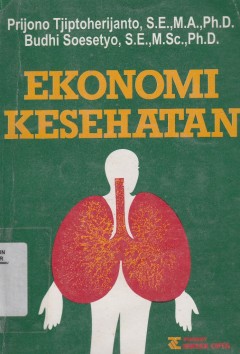
Ekonomi kesehatan
- Edisi
- cet.2
- ISBN/ISSN
- 9789795185468
- Deskripsi Fisik
- 20cm;viii;321 hlm;illus
- Judul Seri
- -
- No. Panggil
- 330 PRI e
- Edisi
- cet.2
- ISBN/ISSN
- 9789795185468
- Deskripsi Fisik
- 20cm;viii;321 hlm;illus
- Judul Seri
- -
- No. Panggil
- 330 PRI e

Prinsip-Prinsip Ilmu Gizi
- Edisi
- -
- ISBN/ISSN
- 9789794137659
- Deskripsi Fisik
- 14cm,20,5cm,v-154 hlm
- Judul Seri
- -
- No. Panggil
- -
- Edisi
- -
- ISBN/ISSN
- 9789794137659
- Deskripsi Fisik
- 14cm,20,5cm,v-154 hlm
- Judul Seri
- -
- No. Panggil
- -

Makanan sehat untuk Atlet
- Edisi
- cet.1
- ISBN/ISSN
- 9786028394352
- Deskripsi Fisik
- 14x20cm,256hlm
- Judul Seri
- -
- No. Panggil
- 796
- Edisi
- cet.1
- ISBN/ISSN
- 9786028394352
- Deskripsi Fisik
- 14x20cm,256hlm
- Judul Seri
- -
- No. Panggil
- 796
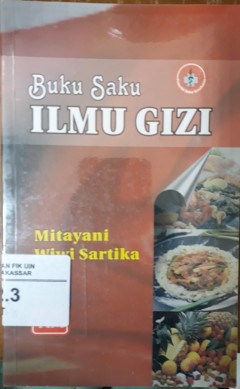
Buku Saku Ilmu Gizi
- Edisi
- cet.1
- ISBN/ISSN
- 9786028200707
- Deskripsi Fisik
- 12x19cm, v-138hlm
- Judul Seri
- -
- No. Panggil
- 612.3
- Edisi
- cet.1
- ISBN/ISSN
- 9786028200707
- Deskripsi Fisik
- 12x19cm, v-138hlm
- Judul Seri
- -
- No. Panggil
- 612.3
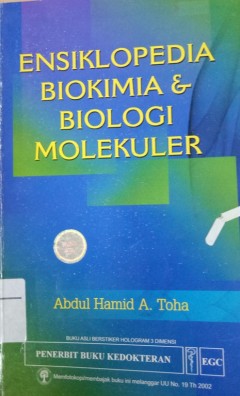
Ensiklopedi Biokimia dan Biologi Molekuler
- Edisi
- Cet.1
- ISBN/ISSN
- 9789790441071
- Deskripsi Fisik
- 15,5cm,24cm,xxiii-884
- Judul Seri
- -
- No. Panggil
- 572.03
- Edisi
- Cet.1
- ISBN/ISSN
- 9789790441071
- Deskripsi Fisik
- 15,5cm,24cm,xxiii-884
- Judul Seri
- -
- No. Panggil
- 572.03

EBOOK: MEDICAL BIOCHEMISTRY AT a GLANCE
Medical biochemistry the signed and written as a learnig aid for undergraduate. this book consisten of series od progressively organized, self-contained two-page spreads, in keeping with the general formula of the at a glance series the emphasis has been on thediagrams with supplementary text, and anttempt has been made to keep the diagrams as simple as possible given immense complexity of the …
- Edisi
- -
- ISBN/ISSN
- -
- Deskripsi Fisik
- -
- Judul Seri
- Untuk Baca FULL TEXT di Perpustakaan FKIK UINAM
- No. Panggil
- EBOOK
EBOOK: Nurse’s Manual of Laboratory and Diagnostic Tests
INTRODUCTION Blood constitutes 6 to 8 percent of total body weight. In terms of volume, women have 4.5 to 5.5 L of blood and men 5 to 6 L. In infants and children, blood volume is 50 to 75 mL/kg in girls and 52 to 83 mL/kg in boys. The principal functions of blood are the transport of oxygen, nutrients, and hormones to all tissues and the removal of metabolic wastes to the organs of excreti…
- Edisi
- -
- ISBN/ISSN
- -
- Deskripsi Fisik
- -
- Judul Seri
- Untuk Baca FULL TEXT di Perpustakaan FKIK UINAM
- No. Panggil
- EBOOK
EBOOK: THE KIDNET AT A GLANCE
This book provides a comprehensive course in the major aspects of renal and urinary system science and disease which is suitable for students of medicine and other life science in addition, we hope that this book will be a valuable learning and revision tool fot those in more advanced training and will provide a handy reference book for more experienced clinicians
- Edisi
- -
- ISBN/ISSN
- -
- Deskripsi Fisik
- -
- Judul Seri
- Untuk Baca FULL TEXT di Perpustakaan FKIK UINAM
- No. Panggil
- EBOOK
EBOOK: COMPLEMENTARY THERAPIES FOR PHYSICAL THERAPY
Complementary and alternative therapies have been defi ned in various ways. These defi nitions have evolved as our understanding and study of the fi eld have been refi ned. The defi nitions of complementary and alternative therapies vary with the organization that defi nes them and shift over time. In 1999 NCCAM described CAM as treatments and health care practices not taught widely in m…
- Edisi
- -
- ISBN/ISSN
- -
- Deskripsi Fisik
- -
- Judul Seri
- Untuk Baca FULL TEXT di Perpustakaan FKIK UINAM
- No. Panggil
- EBOOK
EBOOK: COMMUNITY & PUBLIC HEALTH NURSING Promoting the Public’s Health
health, I ask students “Why do people end up in the hospital?” Many of them give the usual answers—“They need surgery,” “They get in accidents,” and the like. Then I tell them the Story of Jason: “Why is Jason in the hospital? (Because he has a bad infection in his leg.) But why does he have an infection? (Because he has a cut on his leg and it got infected.) But why doe…
- Edisi
- -
- ISBN/ISSN
- -
- Deskripsi Fisik
- -
- Judul Seri
- Untuk Baca FULL TEXT di Perpustakaan FKIK UINAM
- No. Panggil
- EBOOK
 Karya Umum
 Filsafat
 Agama
 Ilmu-ilmu Sosial
 Bahasa
 Ilmu-ilmu Murni
 Ilmu-ilmu Terapan
 Kesenian, Hiburan, dan Olahraga
 Kesusastraan
 Geografi dan Sejarah